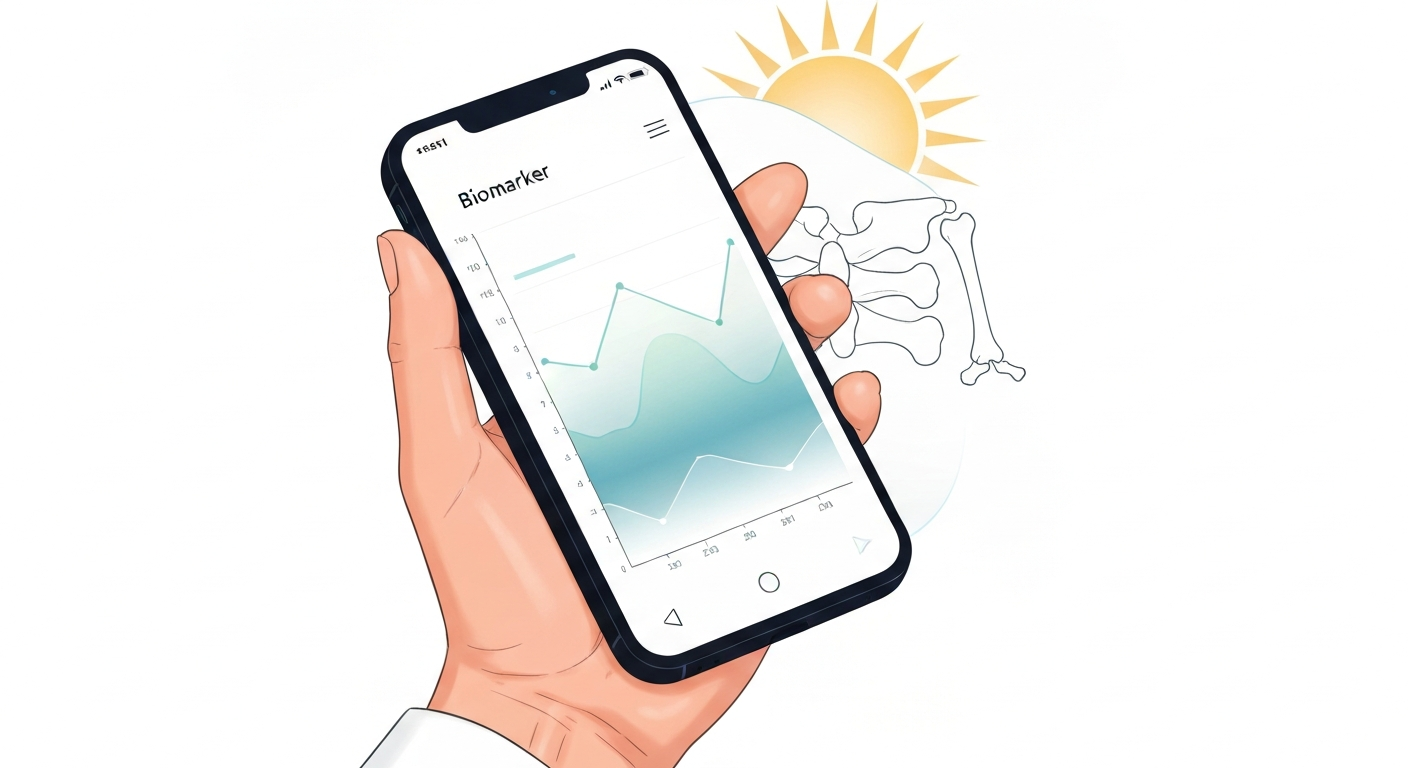
Understanding your vitamin d blood test results with BioMedli
Demystify your vitamin D blood test results. Learn how BioMedli helps you track trends over time, understand lab reports, and prepare for informed conversations with your clinician, keeping your health journey organized and clear.
June 15, 2026/6 min read
Vitamin DDeficiencyLab Reports
BioMedli is for education and organization of health data. It does not diagnose disease, replace a clinician, or tell you what treatment is right for you.
Your regular health check-ups often include a blood test for Vitamin D, a crucial nutrient for overall well-being. But once you receive your lab report, understanding what the numbers mean, especially over time, can feel complex. BioMedli is designed to bring clarity to this process, helping you organize, visualize, and understand your Vitamin D levels longitudinally, empowering you for better conversations with your healthcare provider.
What is Vitamin D and Why is it Important?
Often called the "sunshine vitamin," Vitamin D is a fat-soluble vitamin essential for several vital bodily functions. Its most well-known role is in maintaining bone health by helping your body absorb calcium and phosphate. Beyond bones, Vitamin D is also implicated in immune function, muscle function, and even brain health.
While our bodies can produce Vitamin D when exposed to sunlight, many factors—like geographical location, season, skin tone, and sunscreen use—can limit this production. Dietary sources, such as fatty fish, fortified milk, and certain supplements, also contribute.
The Vitamin D Blood Test: What to Expect
When your clinician orders a Vitamin D blood test, they are typically looking for your 25-hydroxyvitamin D [25(OH)D] level. This is considered the best indicator of your body's Vitamin D stores because it reflects both dietary intake and sun exposure.
Your lab report will usually specify the unit of measurement, commonly either nanograms per milliliter (ng/mL) or nanomoles per liter (nmol/L). It's important to note that 1 ng/mL is equivalent to 2.5 nmol/L. Your report will also include a reference range, which is the typical range considered healthy by the specific laboratory that processed your sample.
Interpreting Your Vitamin D Results
Understanding where your 25(OH)D level falls within general guidelines is a key step, though always remember that only your clinician can provide a personalized interpretation based on your overall health, symptoms, and medical history.
Here's a general guide to Vitamin D classifications, based on widely accepted medical guidelines:
Classification
25(OH)D Level (ng/mL)
25(OH)D Level (nmol/L)
**Deficient**
< 20
< 50
**Insufficient**
20 - 29
50 - 74
**Sufficient**
30 - 100
75 - 250
*Potential Toxicity*
> 100
> 250
How BioMedli Empowers Your Understanding
Navigating multiple lab reports over time can be cumbersome. BioMedli transforms your scattered health data into a clear, actionable overview, especially for biomarkers like Vitamin D.
1. Accurate Data Extraction from Your Lab PDFs:
When you upload your blood report PDFs to BioMedli, our system accurately extracts key biomarkers, preserving critical details like the specific units (e.g., ng/mL or nmol/L), the exact date of the test, and your lab's unique reference range notes. This ensures that the data you see in BioMedli is precisely what was reported by your lab.
2. Tracking Trends Over Time:
This longitudinal view is where BioMedli truly shines. Instead of scattered PDFs, you see a clear trendline of your Vitamin D levels over months or years. Did your level dip in winter? Did a new supplement make a difference? Visualizing these trends can offer insights that a single report cannot, helping you understand how various factors might impact your levels.
3. Preparing for Informed Clinician Conversations:
With your organized lab history in BioMedli, you can walk into your appointments prepared, equipped with a clear, concise overview of your Vitamin D trends. This allows you to ask more pointed questions, discuss specific fluctuations, and collaborate more effectively with your clinician on your health management plan.
When to Talk to Your Clinician
It's important to consult your healthcare provider if your Vitamin D levels are outside the established reference range, if you are experiencing symptoms potentially related to deficiency (such as bone pain or muscle weakness), or if you have any questions about supplementation or lifestyle adjustments. BioMedli is an organizational tool to support these conversations, not a diagnostic or treatment recommendation platform.
Organize Your Lab History with BioMedli
Take control of your health data. Start uploading your blood reports today to track your Vitamin D trends and prepare for more informed discussions with your clinician.
What is the difference between 25(OH)D and 1,25(OH)2D?
25-hydroxyvitamin D [25(OH)D] is the primary storage form of Vitamin D in your body and is the best indicator of overall Vitamin D status. 1,25-dihydroxyvitamin D [1,25(OH)2D] is the active hormonal form of Vitamin D. While both are crucial, the 25(OH)D test is typically used to assess Vitamin D deficiency or sufficiency, as its levels are more stable and reflect overall body stores.
Why do different labs have slightly different reference ranges for Vitamin D?
Reference ranges can vary slightly between laboratories due to differences in testing methods (assays), equipment, and the populations from which their reference data were established. This is why it's critical to always refer to the specific reference range provided on *your* lab report when interpreting your results. BioMedli ensures that your lab's original reference ranges are preserved alongside your extracted biomarker data.
Can I take Vitamin D supplements without a doctor's advice?
It is strongly advised to consult your clinician before starting any Vitamin D supplements, especially high-dose ones. While deficiency is common, excessive Vitamin D intake can lead to toxicity, causing symptoms like nausea, vomiting, weakness, and potentially kidney problems. Your clinician can assess your individual needs, recommend appropriate dosages, and monitor your levels safely.
How does BioMedli help me if my lab uses different units (ng/mL vs. nmol/L) across different reports?
BioMedli accurately extracts and preserves the specific units (ng/mL or nmol/L) from each of your uploaded PDF reports. While the units may differ between labs or over time, BioMedli's trend visualization tools help you track changes regardless, providing a consistent view of your historical data and the accompanying reference ranges for each test. This ensures you always see your data in its original context.
Make your lab history easier to review
Upload reports, verify extracted values, and build a timeline you can discuss with your clinician.
Biomarker readings aren't universal. Learn why "the same biomarker different meaning" applies to everyone and how understanding your "personal baseline" within "lab context" is crucial for your health journey. BioMedli helps you track your unique trends calmly.
Ever wondered about the difference between ferritin and iron on your lab report? We break down these key biomarkers, explain their distinct roles in your body, and show how BioMedli helps you track their trends calmly over time for more informed health conversations.
Kidney health is vital, and tracking key markers like creatinine and eGFR over time can provide valuable insights. Learn how BioMedli helps you organize your lab data, understand trends, and prepare for more informed discussions with your clinician about your kidney function.