Why lipoprotein(a) belongs in your preventive baseline
Lp(a) is inherited, easy to miss on routine blood work, and increasingly recommended as a once-in-adulthood measurement. Here is how to document it, interpret it carefully, and use it as context for a clinician conversation.
May 27, 2026/7 min read
Lp(a)Cardiovascular RiskPreventive Health
BioMedli is for education and organization of health data. It does not diagnose disease, replace a clinician, or tell you what treatment is right for you.
Most cholesterol conversations still revolve around LDL-C, HDL-C, and triglycerides. But one marker that often gets missed in ordinary screening is , written as .
lipoprotein(a)
Lp(a)
That omission matters because Lp(a) is mostly inherited, is not part of a standard lipid panel, and can add cardiovascular risk information that is easy to overlook if your lab history is scattered across different portals, PDFs, and health systems.
For BioMedli users, this is exactly the kind of marker that benefits from clean recordkeeping: get the original lab report, preserve the units, and keep the result visible next to the rest of your long-range cardiometabolic data. If you upload past reports, follow the Upload Guide so uncommon tests and reference notes are easier to capture accurately.
What Lp(a) actually is
Lp(a) is an LDL-like particle with an added protein called apolipoprotein(a). You cannot feel a high Lp(a), and lifestyle changes usually do not lower the number itself in a meaningful way. What lifestyle can do is help lower your overall cardiovascular risk, which is an important distinction.
Because the marker is largely genetic and tends to stay fairly stable over time, many guidelines and expert statements now support measuring it at least once in adulthood. That makes Lp(a) less like a weekly "biohacking" number and more like a baseline risk input that should be documented well and discussed in context.
Why it matters even when your standard panel looks acceptable
You can have a routine cholesterol panel that seems ordinary and still have elevated Lp(a). That is one reason clinicians treat it as a risk-enhancing factor rather than a standalone diagnosis.
In practical terms, an elevated Lp(a) may help explain why a person with otherwise modest-looking numbers still needs a more careful prevention plan. It can also matter more when combined with other signals such as:
a family history of early heart disease
familial hypercholesterolemia
diabetes or insulin resistance
persistently elevated apoB or LDL-C
premature cardiovascular events in close relatives
If your Lp(a) result appears in an old cardiology or advanced lipid report, BioMedli can help you keep it attached to the rest of your timeline instead of letting it disappear in a PDF archive. The demo biomarkers view shows the kind of longitudinal organization that makes clinician review easier.
The unit problem: mg/dL versus nmol/L
One reason Lp(a) gets messy in real life is that labs may report it in mg/dL or nmol/L. Those units are not directly interchangeable with one universal conversion factor because the particle varies between people.
That means the safest move is simple:
keep the original unit from the source report
keep the original date
avoid casual spreadsheet conversions unless your clinician or lab provides the exact context
Good preventive tracking is not just about collecting more data. It is about preserving the exact form of the result so later interpretation is less error-prone. That principle also fits BioMedli's Safety and Responsible Use boundary: organized data can support better questions, but it does not replace medical judgment.
What a high result does and does not mean
An elevated Lp(a) does not mean you are destined to have a heart attack. It also does not mean BioMedli, or any app, can tell you what treatment you personally need.
What it can mean is that your clinician may want a more complete look at overall risk, including the rest of your lipid picture, blood pressure, glucose-related markers, smoking status, family history, kidney function, and sometimes imaging or specialist referral.
That is why Lp(a) is best treated as a context marker:
useful for prevention planning
important to document accurately
risky to interpret in isolation
A better workflow for BioMedli users
If you want to make Lp(a) useful instead of just interesting, use a tighter workflow:
Ask whether you have ever had Lp(a) measured.
Find the original report, not just a remembered number.
Upload the report with the full page and units intact.
Review the extracted value against the source PDF.
Keep it alongside apoB, LDL-C, triglycerides, A1c, blood pressure, and family-history context for your next clinician conversation.
BioMedli is most helpful when it reduces fragmentation. The point is not to create anxiety around a single biomarker. The point is to make the record clearer so prevention decisions can happen with better context. If you are new to the platform, How BioMedli works and the product overview are the fastest orientation points.
Questions worth bringing to a clinician
If an Lp(a) result is elevated, reasonable questions include:
Was this measured in mg/dL or nmol/L?
How does this change my overall cardiovascular risk picture?
Are my LDL-C, apoB, blood pressure, and glucose-related markers already controlled appropriately?
Does my family history make this result more important?
Should relatives discuss testing with their own clinicians?
Those are prevention questions, not treatment instructions. That distinction matters.
Bottom line
Lp(a) is one of the clearest examples of a biomarker that is easy to miss, hard to interpret casually, and valuable to preserve correctly. A once-in-adulthood measurement may be enough for many people, but the documentation of that measurement should be durable.
BioMedli cannot diagnose cardiovascular disease or replace a licensed clinician. What it can do is help you keep uncommon but important lab findings visible, source-linked, and easier to review over time.
No. BioMedli can help organize and explain lab data, but Lp(a) interpretation should happen with a qualified clinician.
Should Lp(a) be checked repeatedly?
Lp(a) is largely genetic and often stable. Many people use it as a once-in-adulthood baseline, but personal testing plans should come from a clinician.
Make your lab history easier to review
Upload reports, verify extracted values, and build a timeline you can discuss with your clinician.
Understanding your lab results can be empowering, but it's crucial to distinguish proactive health tracking from excessive health anxiety. Learn how BioMedli helps you organize longitudinal lab data to foster informed discussions with your clinician, promoting a calm, preventive health mindset.
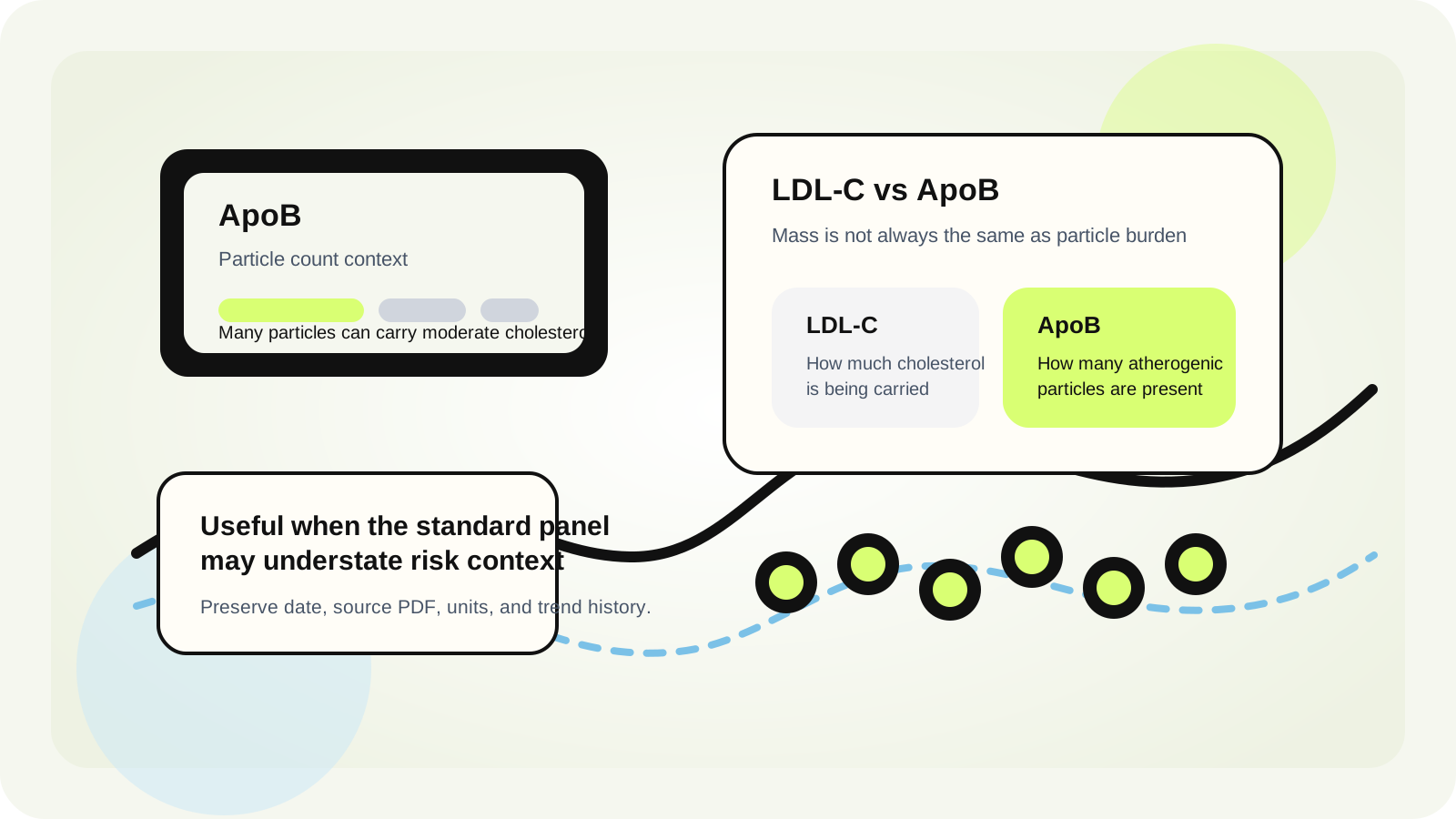
LDL-C estimates cholesterol mass, while ApoB reflects the number of potentially artery-penetrating particles. That difference can matter when triglycerides, insulin resistance, or metabolic dysfunction blur the picture.
A single blood test provides a snapshot, not the full picture of your health. Discover why tracking blood test trends over time is crucial for understanding your personal health journey and how BioMedli helps you organize and visualize your lab data for better health conversations.