When LDL-C looks fine but ApoB does not: a smarter way to read lipid risk
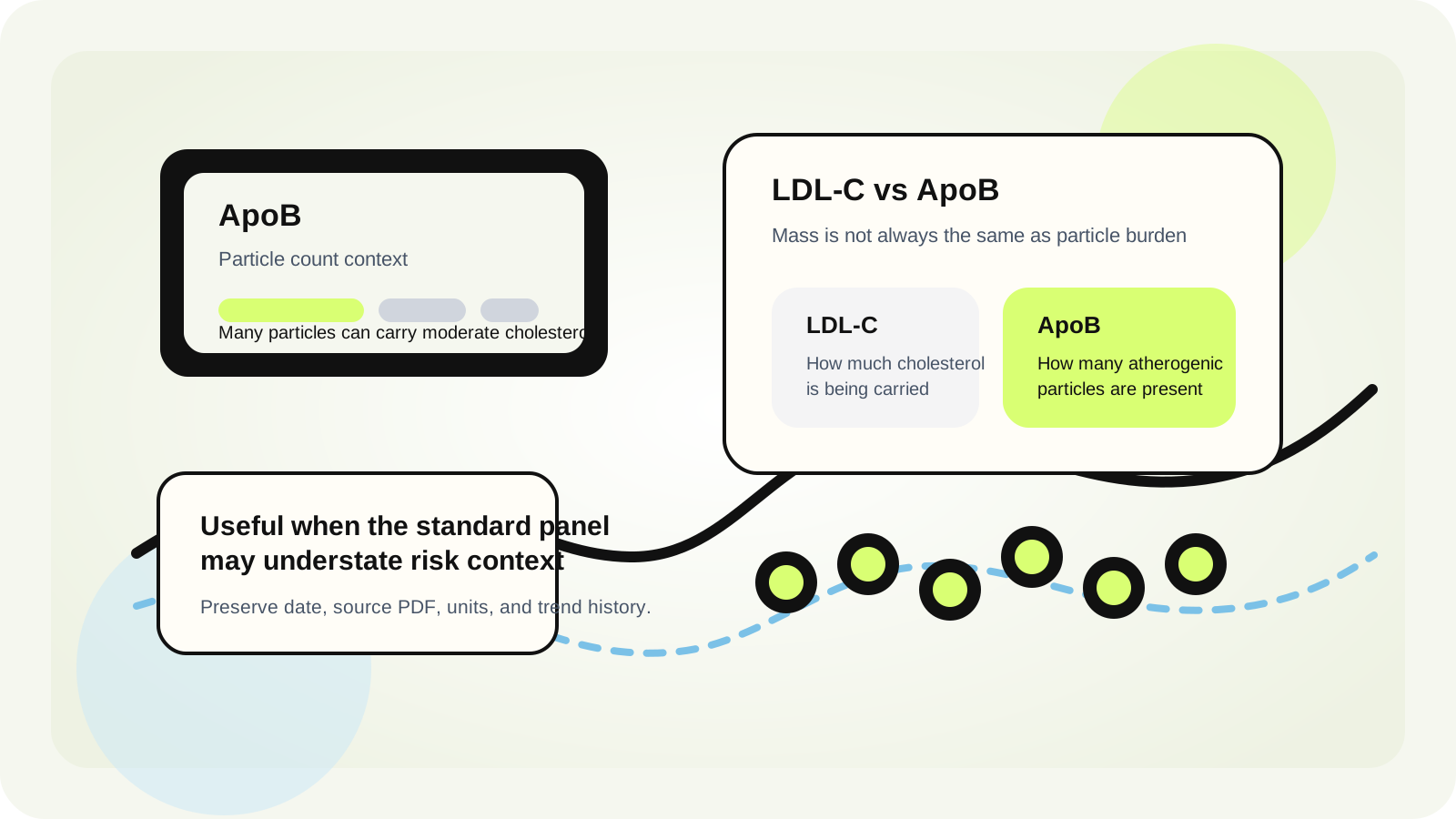
LDL-C estimates cholesterol mass, while ApoB reflects the number of potentially artery-penetrating particles. That difference can matter when triglycerides, insulin resistance, or metabolic dysfunction blur the picture.
May 30, 2026/7 min read
ApoBCholesterolPreventive Health
BioMedli is for education and organization of health data. It does not diagnose disease, replace a clinician, or tell you what treatment is right for you.
Most people who review cholesterol labs are shown the familiar list: total cholesterol, LDL-C, HDL-C, and triglycerides. Those markers are useful, but they do not all answer the same question.
One of the most useful clarifications in preventive cardiometabolic care is the difference between how much cholesterol is being carried and how many lipoprotein particles are carrying it. That is where apolipoprotein B, usually shortened to ApoB, becomes useful.
For BioMedli users, ApoB is exactly the kind of marker that benefits from careful recordkeeping. It often appears on advanced lipid panels, executive checkup labs, or cardiology workups, then disappears into a PDF portal. If the result is not preserved with its original date, unit, and source report, the context is easy to lose.
What ApoB actually measures
ApoB is a structural protein found on atherogenic lipoprotein particles such as LDL, VLDL, IDL, and lipoprotein(a). In practical terms, one ApoB generally represents one potentially artery-penetrating particle.
That makes ApoB different from LDL-C:
LDL-C estimates the amount of cholesterol inside LDL particles.
ApoB reflects the number of particles carrying cholesterol that may contribute to plaque formation over time.
Those values often travel together. But they do not always match cleanly.
Why discordance matters
Sometimes LDL-C looks acceptable while ApoB is still elevated. This can happen when a person has many smaller or cholesterol-depleted particles rather than fewer cholesterol-rich ones. In that situation, the cholesterol mass may not look dramatic, but particle burden may still deserve attention.
No. LDL-C estimates cholesterol mass, while ApoB is used as a marker of the number of atherogenic particles. They often move together, but not always.
Can BioMedli tell me whether my ApoB is dangerous?
No. BioMedli can organize and explain the result, but personal risk interpretation should happen with a qualified clinician who has the rest of your medical context.
Make your lab history easier to review
Upload reports, verify extracted values, and build a timeline you can discuss with your clinician.
Understanding your lab results can be empowering, but it's crucial to distinguish proactive health tracking from excessive health anxiety. Learn how BioMedli helps you organize longitudinal lab data to foster informed discussions with your clinician, promoting a calm, preventive health mindset.
Health TrackingHealth AnxietyPreventive Health
6 min read
This kind of discordance becomes more relevant in settings such as:
elevated triglycerides
insulin resistance or prediabetes
type 2 diabetes
central adiposity or metabolic syndrome
mixed dyslipidemia
That does not mean a single ApoB result gives a diagnosis. It means ApoB can add context when the usual panel does not tell the whole story.
Why some clinicians pay attention to ApoB
Major cardiology guidance increasingly treats ApoB as a helpful risk-enhancing marker, especially when the standard panel may understate atherogenic burden. It is not needed for every person in every situation, but it can be particularly useful when cardiometabolic risk is not straightforward.
If you have already learned about lipoprotein(a), ApoB solves a different problem. Lp(a) is largely inherited and often used as a baseline risk input. ApoB is more often used to understand the current load of atherogenic particles moving through the system.
A simple way to think about LDL-C versus ApoB
An everyday analogy helps:
LDL-C asks, how much cargo is inside the trucks?
ApoB asks, how many trucks are on the road?
If there are many trucks carrying moderate amounts of cargo, the road exposure can still be high. That is why some clinicians prefer ApoB when they want a cleaner estimate of particle-related risk.
Why BioMedli users should preserve the original report
Advanced lipid markers are easy to mis-handle in real life. Results may come from different labs, reference ranges may change, and older reports may be trapped in portals you stop using.
If ApoB appears anywhere in your history:
Keep the original PDF, not just a remembered number.
Preserve the collection date and the lab name.
Review the extracted value against the source report after upload.
Track it beside triglycerides, non-HDL cholesterol, LDL-C, A1c, and blood pressure context rather than in isolation.
BioMedli is most useful when it reduces fragmentation across reports. The Upload Guide is the fastest way to keep advanced markers, units, and reference notes attached to the source document, and the demo biomarkers view shows how longitudinal review becomes easier once those values live on one timeline.
What ApoB does and does not tell you
ApoB can help estimate how many atherogenic particles are present, but it does not tell you:
whether you have symptoms that need urgent evaluation
what treatment is right for you
whether one isolated lab draw outweighs the rest of your clinical picture
It also should not be interpreted without broader context such as family history, blood pressure, glucose-related markers, smoking status, kidney function, medications, and prior cardiovascular history.
That boundary fits BioMedli's Safety and Responsible Use policy. Organizing a result well can improve the quality of a clinician conversation, but it does not replace clinical judgment.
When this marker is especially easy to overlook
ApoB is often overlooked because people assume a “normal LDL” closes the question. In reality, preventive care is often about resolving ambiguity, not just reacting to obviously abnormal numbers.
If your lab history includes:
rising triglycerides over time
worsening fasting glucose or A1c
fatty liver concerns
weight or waist changes tied to metabolic health
a strong family history of early cardiovascular disease
then ApoB may be one of the markers worth preserving carefully for follow-up discussions.
Questions worth bringing to a clinician
Reasonable questions include:
Does my ApoB agree with the rest of my lipid panel, or is there discordance?
Do my triglycerides, glucose markers, or waist-related risk make ApoB more useful here?
Should this be followed over time, or was it mainly a one-time clarification?
Which markers matter most for my overall prevention plan?
Those are better questions than trying to force a single lab value into a self-diagnosis.
Bottom line
ApoB is not a replacement for the standard lipid panel. It is a sharper context marker when LDL-C alone may not capture the full atherogenic picture.
BioMedli cannot diagnose cardiovascular disease or tell you what treatment to start. What it can do is help you keep advanced lipid markers attached to their original reports, visible across time, and easier to review alongside the rest of your metabolic story.
A single blood test provides a snapshot, not the full picture of your health. Discover why tracking blood test trends over time is crucial for understanding your personal health journey and how BioMedli helps you organize and visualize your lab data for better health conversations.
Lp(a) is inherited, easy to miss on routine blood work, and increasingly recommended as a once-in-adulthood measurement. Here is how to document it, interpret it carefully, and use it as context for a clinician conversation.