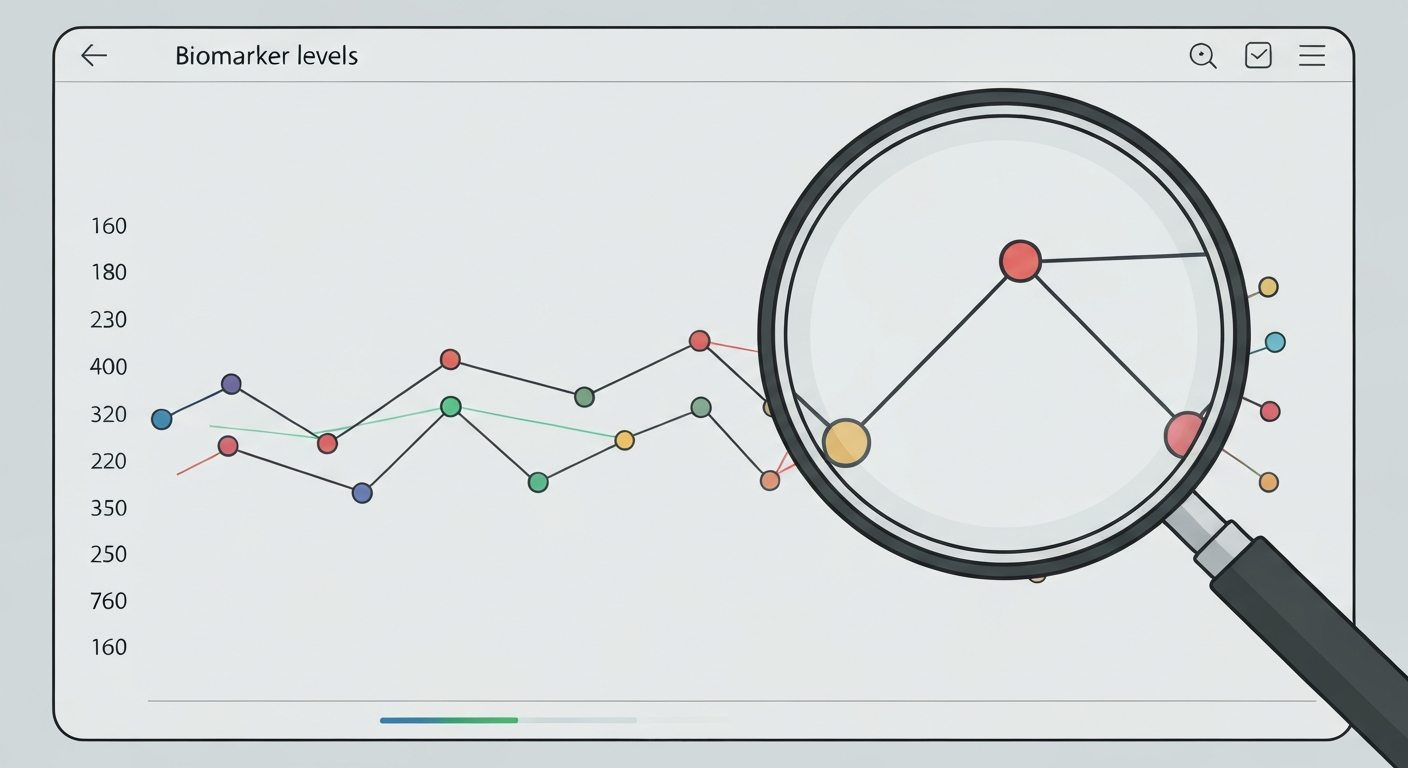
Imagine trying to understand the weather pattern of a year by looking at a single day's forecast. It tells you something, but it hardly paints the full picture. The same principle applies to your health when interpreting blood test results.
While a single lab value provides a snapshot of your health at a specific moment, its true significance often emerges when viewed in context – as part of a trend. At BioMedli, we believe that understanding your health journey means looking beyond individual numbers to see the larger narrative your body tells over time. This is why tracking blood test trends is so crucial for proactive health management.
The Snapshot vs. The Story: Why a Single Lab Value Falls Short
Your annual physical includes a battery of blood tests, and you might breathe a sigh of relief (or concern) when you see everything is 'normal' or 'out of range.' However, a single lab value on its own can be misleading.
Numerous factors can influence a biomarker's level on any given day: what you ate, how well you slept, your hydration status, medication, recent exercise, and even stress. A value slightly outside the reference range might be an anomaly, or it could be the first whisper of a developing pattern. Conversely, a 'normal' value might mask a concerning trajectory if it's consistently increasing or decreasing over several months or years.
Without historical data, it's difficult to discern if a number represents a stable baseline, a temporary fluctuation, or a genuine shift in your physiological state. This is where the power of biomarker tracking truly shines.
Identifying Meaningful Change Through Longitudinal Data
The real value lies in observing how your biomarkers change over time. Longitudinal data allows you to identify gradual shifts that might otherwise go unnoticed until they become more pronounced.
For example, a fasting glucose level that consistently creeps up from 90 mg/dL to 95, then 100 over three years, even if still within the 'normal' range, could signal an increased risk for prediabetes. A single reading of 100 wouldn't raise alarms on its own, but the trend certainly would. Similarly, gradual changes in cholesterol ratios, liver enzymes, or kidney function markers can provide early indicators of potential health issues, allowing you and your clinician to intervene proactively rather than reactively. This shift from reactive to proactive care is a cornerstone of preventive health. You can explore how BioMedli helps you visualize these important shifts by checking out our biomarkers demo.
Beyond "Normal": Your Personal Baseline Matters Most
Standard 'normal' reference ranges are statistical averages, not necessarily optimal for every individual. What's 'normal' for the general population might not be optimal for you. Your personal baseline – what's normal for your body – offers a far more insightful perspective.
Imagine someone whose typical Vitamin D level is 60 ng/mL. If their next test shows 40 ng/mL, while still within the 'normal' range (e.g., 30-80 ng/mL), this 33% drop from their personal baseline is significant. For another person, 40 ng/mL might be their usual healthy level. Biomarker tracking helps you establish and understand your unique physiological patterns.
| Biomarker Example | Single Value (Normal) | Trend Over 3 Years | Potential Implication (for clinician discussion) |
|---|---|---|---|
| Fasting Glucose | 98 mg/dL | 90 → 95 → 98 mg/dL | Gradual increase towards pre-diabetic range. |
| LDL Cholesterol | 110 mg/dL | 95 → 105 → 110 mg/dL | Consistent rise, may indicate increasing risk. |
| Vitamin D | 45 ng/mL | 60 → 50 → 45 ng/mL | Significant drop from personal optimum. |
| TSH | 2.5 mIU/L | 1.8 → 2.2 → 2.5 mIU/L | Gradual increase, potential thyroid changes. |
Empowering Better Conversations with Your Clinician
Your doctor is your most important partner in health. When you bring organized, longitudinal lab data to your appointments, you transform the conversation. Instead of merely reviewing the latest results, you can discuss patterns, point out specific trends, and ask more informed questions.
This collaborative approach allows your clinician to make more precise recommendations, whether it's lifestyle adjustments, further testing, or simply continued monitoring. BioMedli empowers you to arrive at your appointments prepared, turning a quick review into a truly insightful discussion about your health trajectory. Learn more about how BioMedli works to support these discussions.
How BioMedli Helps You Master Your Biomarker Trends
BioMedli is designed precisely for this purpose: to help you move beyond single lab values and embrace the power of blood test trends.
Our platform allows you to securely upload your blood report PDFs from various providers. We then extract your biomarkers, preserving crucial details like units, dates, and the specific reference notes from your lab report. We prioritize your privacy and data security; you can read more about our safety measures.
This meticulous data organization creates a comprehensive, longitudinal record of your health. You can visualize trends with intuitive graphs, making it easy to spot changes over months or years. No more scattered printouts or deciphering old files – just clear, actionable insights at your fingertips.
By centralizing and standardizing your lab history, BioMedli provides the clarity needed to understand your body's story and discuss it effectively with your healthcare provider. Remember, BioMedli is an educational and organizational tool, not a diagnostic one. Always consult with a qualified healthcare professional for medical advice, diagnosis, or treatment.
Unlock Your Health Story
In the journey of managing your health, understanding the 'why' and the 'how' is as important as the 'what.' A single lab value offers a snapshot, but tracking blood test trends reveals the unfolding story of your well-being.
By leveraging tools like BioMedli to organize and visualize your longitudinal lab data, you gain a powerful perspective that can inform proactive health decisions and foster more meaningful partnerships with your clinician. Start seeing your health as a continuous narrative, not a series of isolated events.
Organize Your Lab History
Stop letting your valuable lab data sit in scattered PDFs. Start organizing and understanding your biomarker trends today with BioMedli.