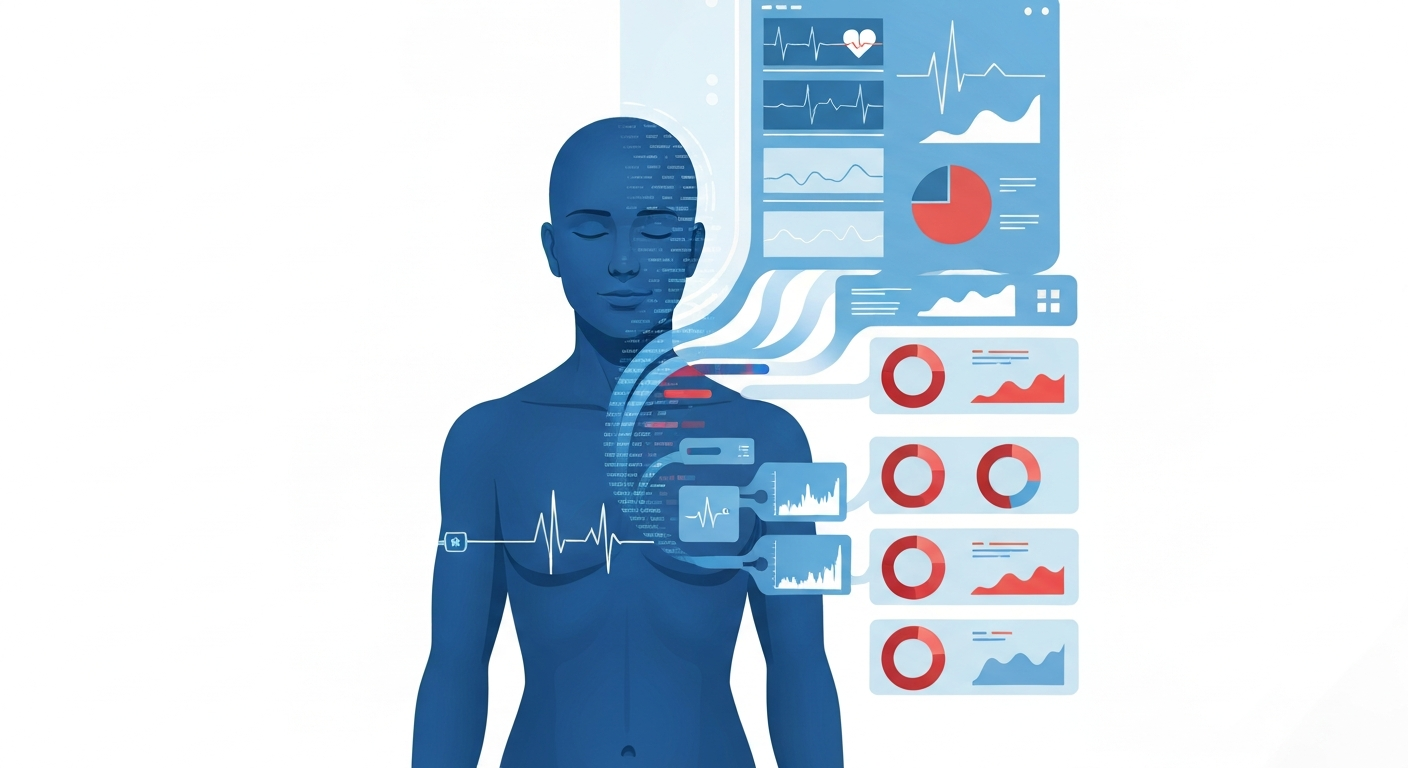
In today's health landscape, we have more tools than ever to understand our bodies. From the immediate feedback of smartwatches to the in-depth insights of lab tests, a wealth of data is at our fingertips. But how do these different data streams — specifically wearable data and blood reports — connect to tell a cohesive story about your health? At BioMedli, we believe they are powerful complements, offering a richer, more nuanced view when brought together.
The Complementary Nature of Wearables and Blood Reports
Think of your health as a complex narrative. Wearables provide the real-time, continuous 'daily journal' – capturing ongoing trends in your activity, sleep, heart rate, and more. They show the dynamic ebb and flow of your body's responses to daily life. For instance, your resting heart rate or sleep duration recorded over weeks can highlight sustained patterns.
Blood reports, on the other hand, are like precise 'snapshots' – detailed examinations of your internal biochemistry at specific moments. They offer objective measurements of biomarkers like cholesterol, glucose, inflammation markers, and nutrient levels, which provide crucial insights into metabolic function, organ health, and potential underlying conditions. While a wearable can tell you you're sleeping less, a blood test might reveal how that sleep deprivation is impacting your blood glucose or cortisol levels.
Neither source alone tells the whole story. Wearable data can indicate what might be happening or changing, while blood tests often explain why or quantify the extent of an internal process. Combining labs and wearables allows you to see both the dynamic trend and the precise internal state.
BioMedli: Organizing Your Lab Data for a Holistic View
This is where BioMedli steps in. Our platform is designed to help you organize your longitudinal lab data with precision. When you upload blood report PDFs, BioMedli intelligently extracts your biomarkers, preserving vital details like units, dates, and reference notes. This meticulous organization ensures that your blood test history is not just a collection of disparate documents, but a structured, trendable record.
Imagine correlating a period of lower activity reported by your wearable with an upward trend in your HbA1c (a marker of long-term blood glucose control) stored in BioMedli. Or perhaps you notice consistent sleep disturbances via your wearable, and a subsequent blood report reveals changes in your thyroid hormone levels. These connections become visible and discussable when your data is organized and accessible.
By centralizing your lab results, BioMedli empowers you to identify potential correlations between your wearable-derived insights and your internal physiological markers. This organized data doesn't just sit there; it becomes a tool for understanding your personal health narrative and preparing for more informed conversations with your clinician.
<p style="text-align: center;">---</p>How Specific Biomarkers and Wearable Metrics Can Inform Each Other
Let's look at some specific examples of how combining wearable data and blood reports can offer a richer understanding for you and your clinician:
| Wearable Metric (Trend over time) | Related Blood Biomarker (BioMedli data) | Potential Combined Insight (for clinician discussion) |
|---|---|---|
| **Resting Heart Rate** (Consistently elevated) | Lipid Panel (Cholesterol, Triglycerides), hs-CRP (Inflammation) | Possible indicator of cardiovascular stress or inflammation, informing discussions about heart health and lifestyle interventions. |
| **Sleep Quality/Duration** (Frequent disturbances, low duration) | HbA1c (Blood Glucose), Cortisol (Stress Hormone), Thyroid Panel | Connections to metabolic health, stress response, and endocrine function; potential impact on glucose regulation. |
| **Daily Activity Levels** (Significant decrease) | HbA1c, Cholesterol, Vitamin D | Impact of sedentary lifestyle on metabolic health, cardiovascular risk, and nutrient absorption. |
Please remember: These are illustrative examples. Your clinician will interpret your unique data in the context of your full medical history.
Empowering Your Clinician Conversations
Having your longitudinal blood test data organized by BioMedli, complete with dates, units, and reference ranges, significantly enhances your ability to discuss your health with your clinician. Instead of presenting a stack of papers, you can articulate trends and connections you've observed between your wearable data and your lab results. This allows your clinician to:
- See the Bigger Picture: Understand how your body is responding over time, not just at a single point.
- Formulate Targeted Questions: Inquire about specific lifestyle factors or symptoms that might explain observed correlations.
- Make More Informed Decisions: Guide personalized recommendations for further testing, lifestyle adjustments, or treatment plans.
BioMedli is built to make you a more informed and engaged participant in your health journey. It does not replace the expertise of your clinician but rather supports you in preparing for more productive consultations. To learn more about how we safeguard your data, please review our safety guidelines.
Start Building Your Integrated Health Story
Combining the continuous insights from your wearables with the precise history of your blood reports, all organized neatly by BioMedli, offers an unparalleled vantage point into your well-being. It's about empowering you to proactively engage with your health data and collaborate more effectively with your healthcare providers. To see how BioMedli extracts and organizes your data, explore our demo of biomarkers.
Organize Your Lab History with BioMedli
Unlock the full potential of your health data. Upload your blood report PDFs to BioMedli and start tracking your biomarker trends over time, preparing you for more insightful conversations with your clinician.